Dalibor Chatrný is one of the most distinctive Czech artists of the second half of the 20th century to be associated with Brno’s art scene. Chatrný saw art as a tool for exploring the world, just like philosophy and science. He drew on his observations of natural processes and sought to connect science with art. His diverse body of work was one never-ceasing experiment, and he was always coming up with new ideas and materials. All along, the main thing for Chatrný was the processual and spatial character of his art, which was defined by repetition and the observation of changing structures. His approach to art was conceptual, based on an exploration of the elementary characteristics of phenomena, realised in a creative and playful artistic process.
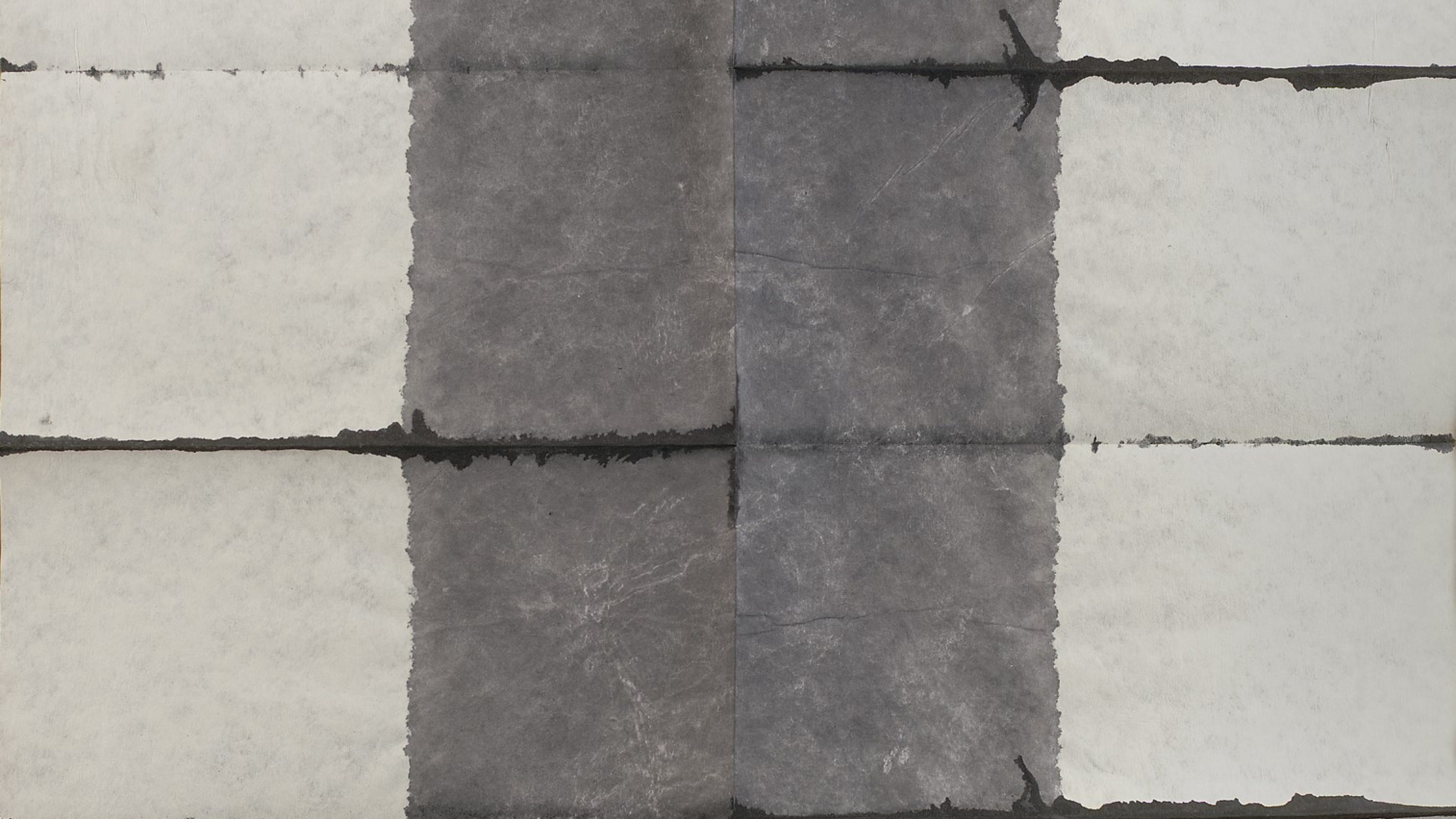
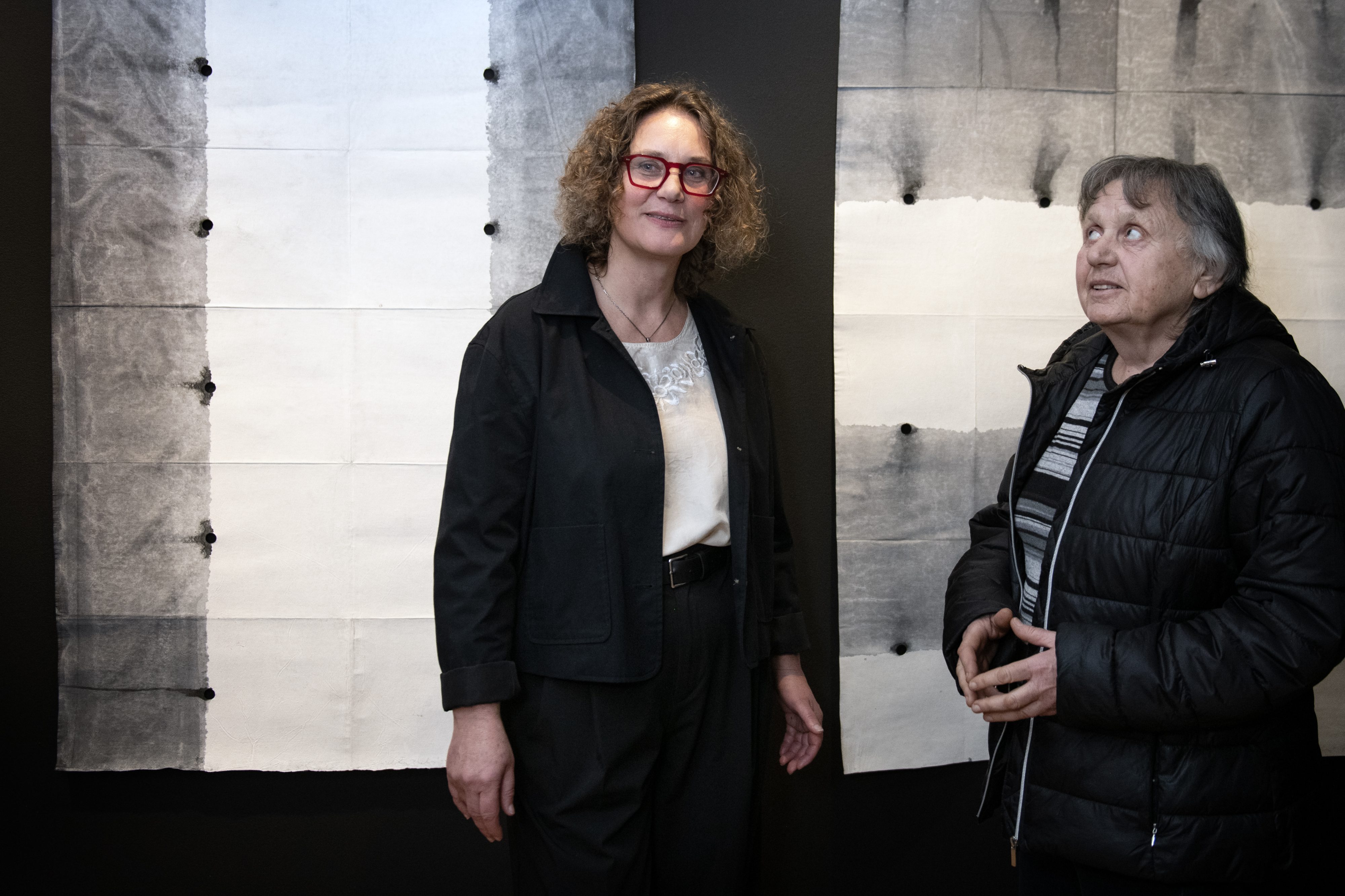
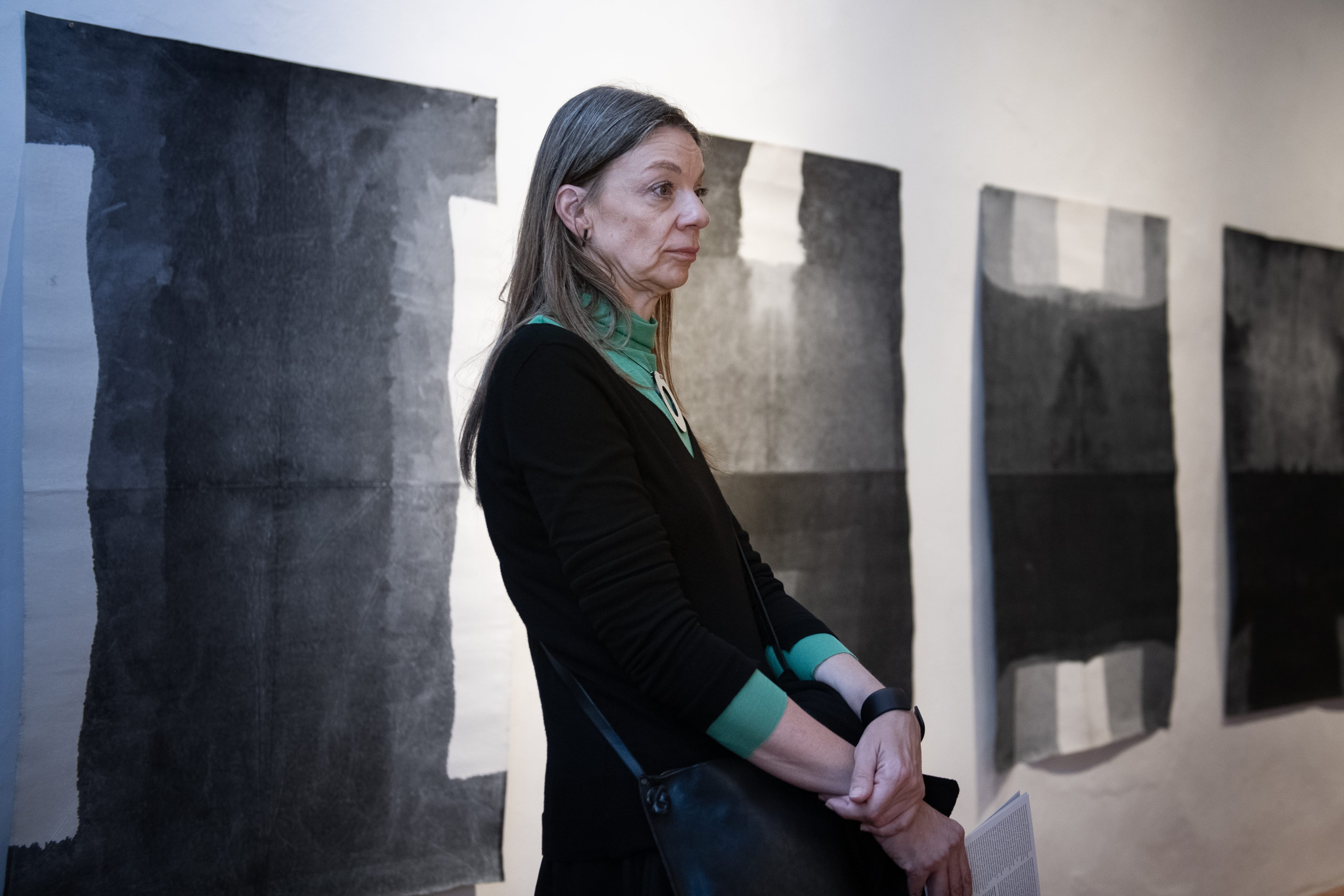
The exhibition at GASK focuses on that part of his broad range of experimental approaches associated with the artistic method of ‘seeping-through’ and the use of perforation. The path towards his first experiments grew out of the expressive possibilities of the graphic arts. In the second half of the 1960s, Chatrný began to create prints using matrices made up of several layers of perforated paper, with the arrangement of holes creating spatial relationships possessing a certain rhythm. He further developed this idea using curved perforated metal plates, and he revisited perforated relief prints and disappearing text (blind-embossed prints) in his later works as well. |He also applied the concept of fading and disappearing lines on the final layers in his ‘aquamarelles’. In the second half of the 1980s, he worked with the natural processes of colouring and ‘seeping-through’, creating works in which he mixed the paints and had them soak through synthetic fabric folded into a rectangle. Unfolding the fabric revealed constructive relationships reflecting the manner in which it had been folded. Like the structures produced by perforated paper, these works seek to capture the mysteries of a hidden space.
The exhibition is held in conjunction with an exhibition of works by Alena Kučerová (born 1935). Both artists share a relationship to printmaking and experimentation, and they both worked with perforated materials and reflected on space. Although their visual language shows certain similarities, they differed in their methods. With Dalibor Chatrný, the use of perforations or the soaking-through of pigments serves to record his process of exploration, whereas Alena Kučerová saw perforations as a tool for producing the work’s end effect. Both artists related to the landscape and applied their knowledge of nature towards achieving a deeper understanding of the world.
Dalibor Chatrný was born 28 August 1925 in Brno and died 5 September 2012 in Rajhrad. He graduated from the Faculty of Education at Charles University (1945–1949) and from Vladimír Sychra and Vladimír Silovský’s studio at the Academy of Fine Arts in Prague (1949–1953). As an educator, he worked at the Secondary School of Industrial Art in Brno. After 1990, he taught in the printmaking studio at the Academy of Fine Arts in Prague, the studio of conceptual tendencies at Brno Technical University’s Faculty of Fine Arts, and the scenography department of the Janáček Academy of Performing Arts in Brno. He was a member of, among others, the Club of Concretists, Umělecká Beseda and Brno’s TT Club. He is the recipient of numerous awards, and his art can be found in leading collections at home and abroad.
www.chatrny.cz
The exhibited works come from the GASK collections or have been provided on loan from the artist’s estate – many thanks go to Dana Chatrná.
GASK se výstavou zapojuje do celorepublikového projektu iniciovaného Klubem konkrétistů KK3 ke 100. výročí narození Dalibora Chatrného.
With this exhibition, GASK joins a year-long project by the Club of Concretists marking the centenary of the artist’s birth.

 English
 Česky
Česky