Untamed presents the latest work of Petr Válek as a phantasmagoric world of images, sounds and objects straddling the line between art, music and performance. The exhibition works with a fictional memory of the Sudetenland, with psychedelic AI-generated images, with faux folk traditions and a childlike imagination that mixes punk playfulness with horror and the grotesque. The exhibition’s audio component is not an accompaniment to images, but has its own, autonomous semantic position. Untamed is an exhibition about childhood memories, the harsh landscape of the Sudeten countryside and the chaos of contemporary reality, but it is also about unfettered artistic freedom and the uncommon beauty of ugliness.
Untamed presents the art of Petr Válek as a complex psychedelic and phantasmagorical world of sounds, images, objects and performative situations in which memory, games, humour and darkness are naturally intertwined. As an artist, Válek does not work in just one discipline or with just one medium – his art grows out of long-term intuitive practice on the boundary between art, music, performance and bricolage. He typically works in an ‘untamed’ manner: outside academic systems and without the need for technical perfection, but with a distinctive and personal order and inner logic.
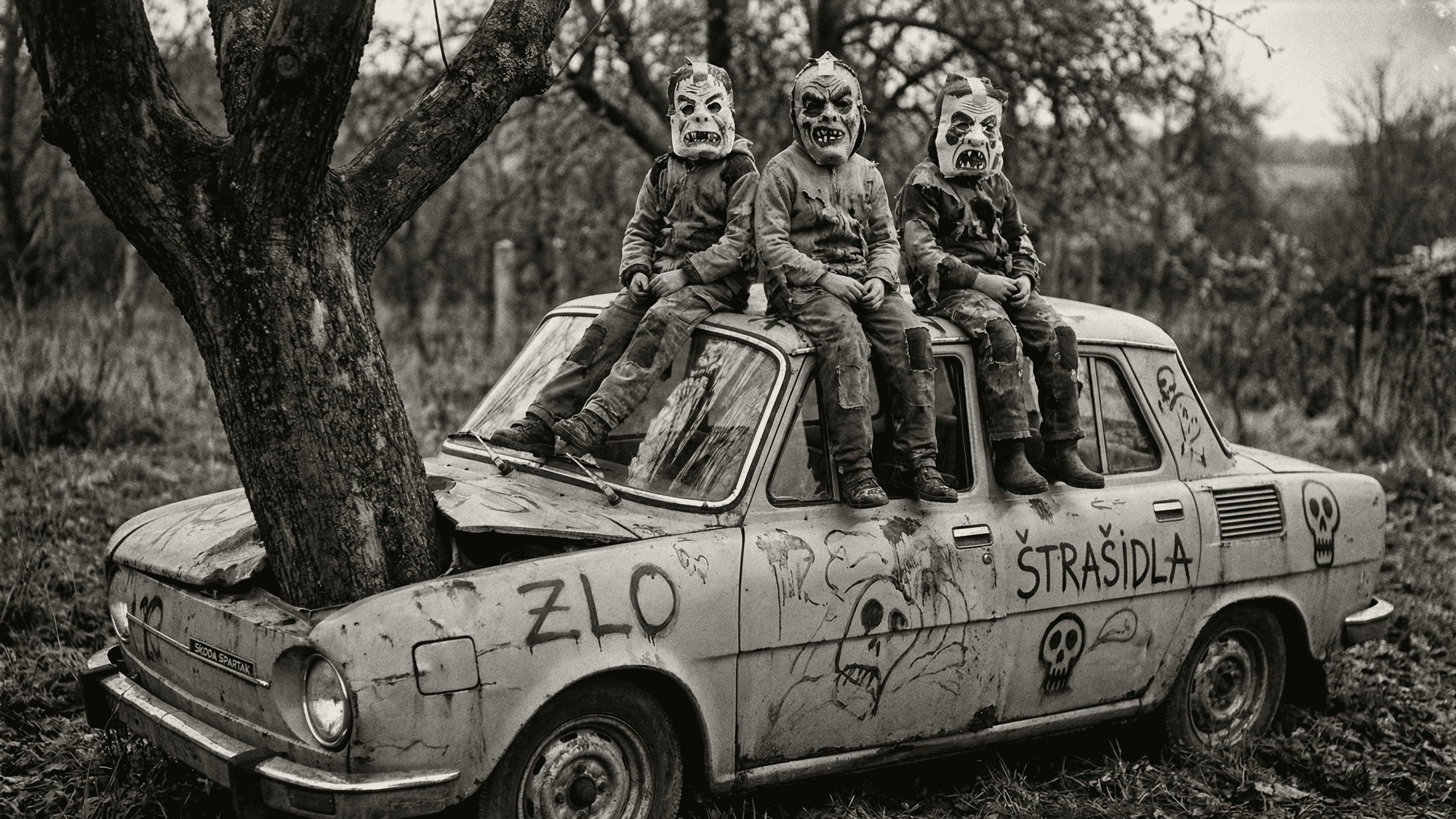
An important role in his art is played by the place in which he lives and works – his family home I Loučná nad Desnou, the Jeseník Mountains and the Sudetenland, a peripheral regional lacking anything monumental but with intense traces of history and a specific poetics. One part of the exhibition is set in the Experimental Space of the Baroque cellar, where Válek presents a series of black-and-white photographs made using artificial intelligence. The pictures do not work with the traditional memory of place but are references to the artist’s childhood memories, mixed with an imaginary, hallucinogenic and emotionally urgent reality. The border regions are revealed to us as a landscape of silence, of a strange and abandoned beauty filtered through a child’s mind in which horror, playfulness, the grotesque and absurd humour are all mixed together. As used here, AI is not a technological curiosity but a tool of illusion, used to generate a reality that never existed but that nevertheless feel uncomfortably convincing. Deliberate imperfections, patina, noise and image decay are an integral part of this aesthetic.
The cellar spaces themselves become a co-author of the installation. The stones, the cold and darkness, and the cross-shaped ground plan create an almost ritualistic space recalling a crypt of some kind of residual past. The changing nature of the illustration over the course of the exhibition (the installation will be changed in June, following the Day of Sound festival) further accentuates the images’ impermanence and the ongoing rewriting of history.
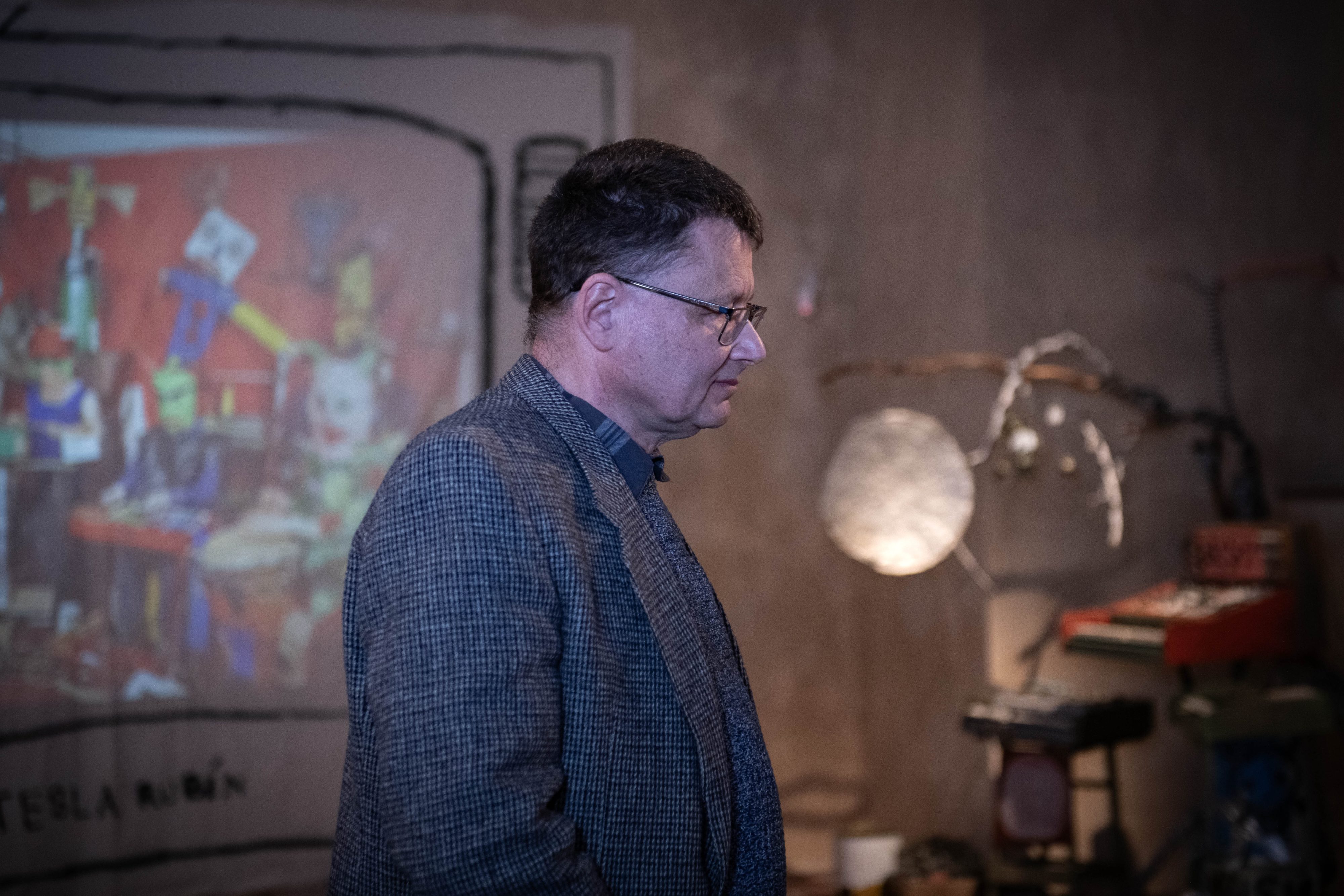
By contrast, the second part of the exhibition is in the Experimental Space in the former Baroque baths. Here, visitors will encounter Válek’s colourful series of fictional photographs and videos that depict the rural countryside as a place of unfettered creativity, faux folk traditions and collective imagination. The folk customs presented here are neither authentic nor particularly reverent – they are an exaggerated, simulated version in which there exists neither kitsch nor a clear boundary between high and low art. Children are not symbols of innocence but radical creators: they found chapels, make instruments, wear masks, play, shout and destroy. The exhibited photographs are brought to life in unusual music videos, accompanied by the artist’s noise music and shown on a strange ‘old-school’ television broadcast that is one part pseudo-documentary, one part questionable ritual and one part bandit play.
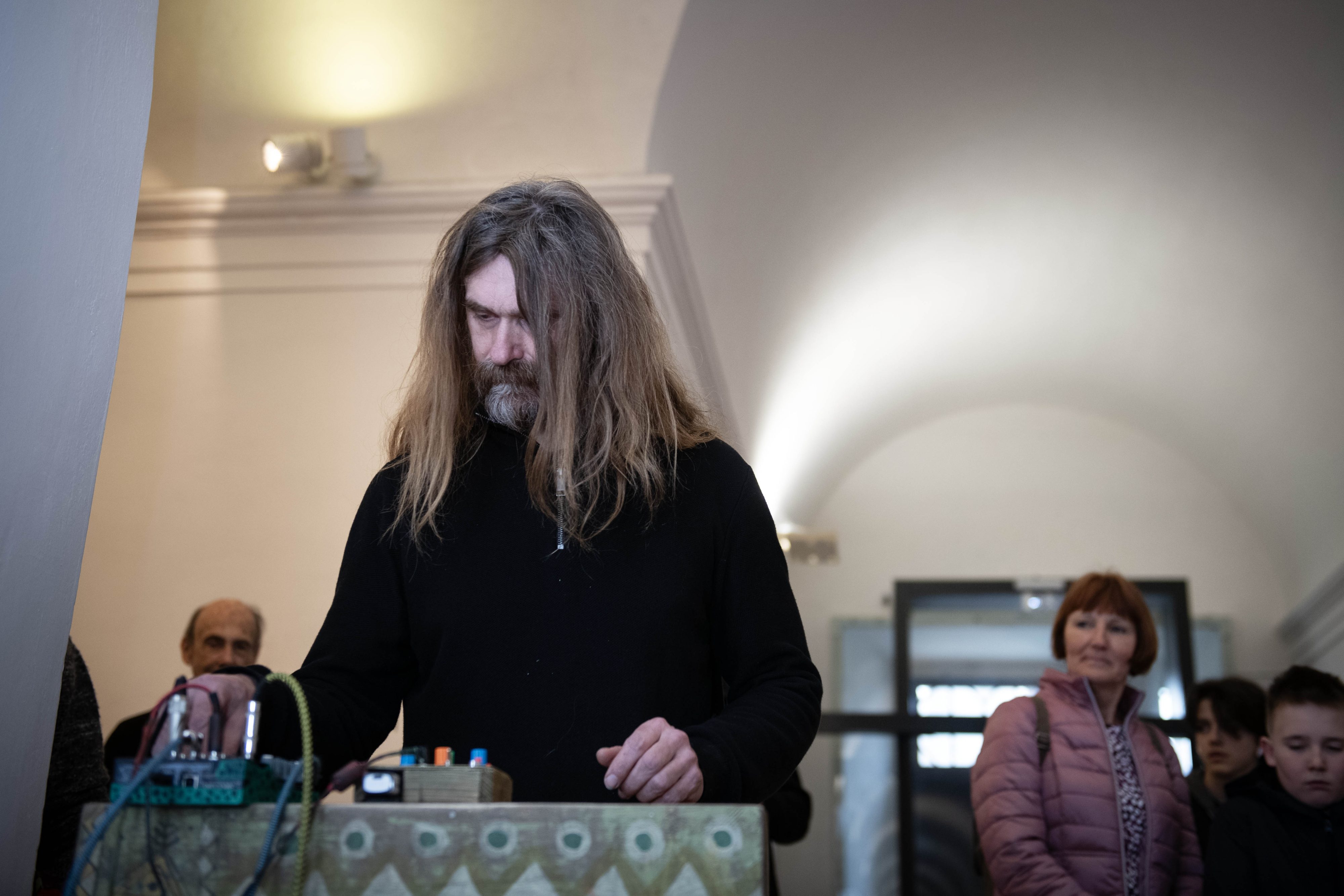
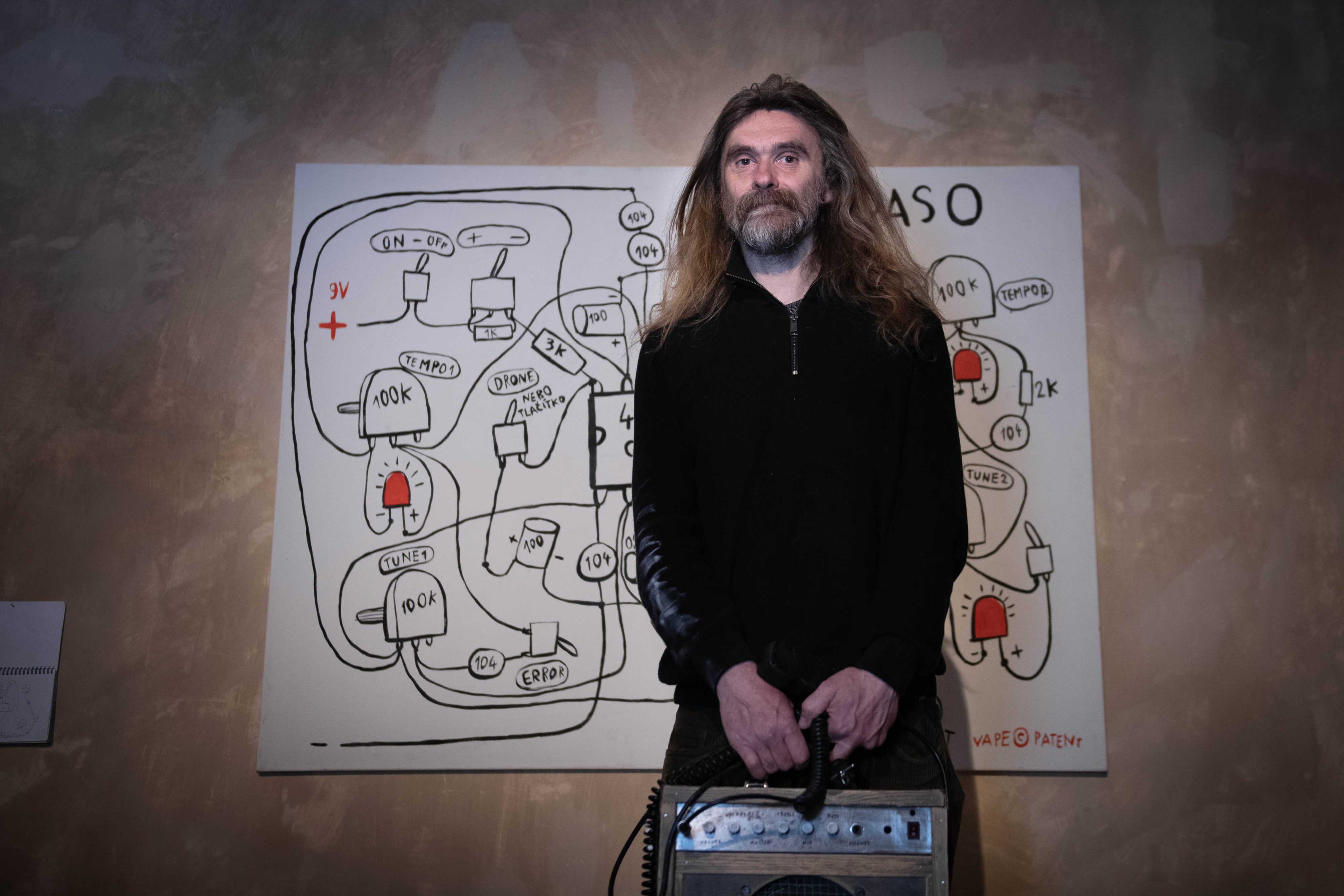
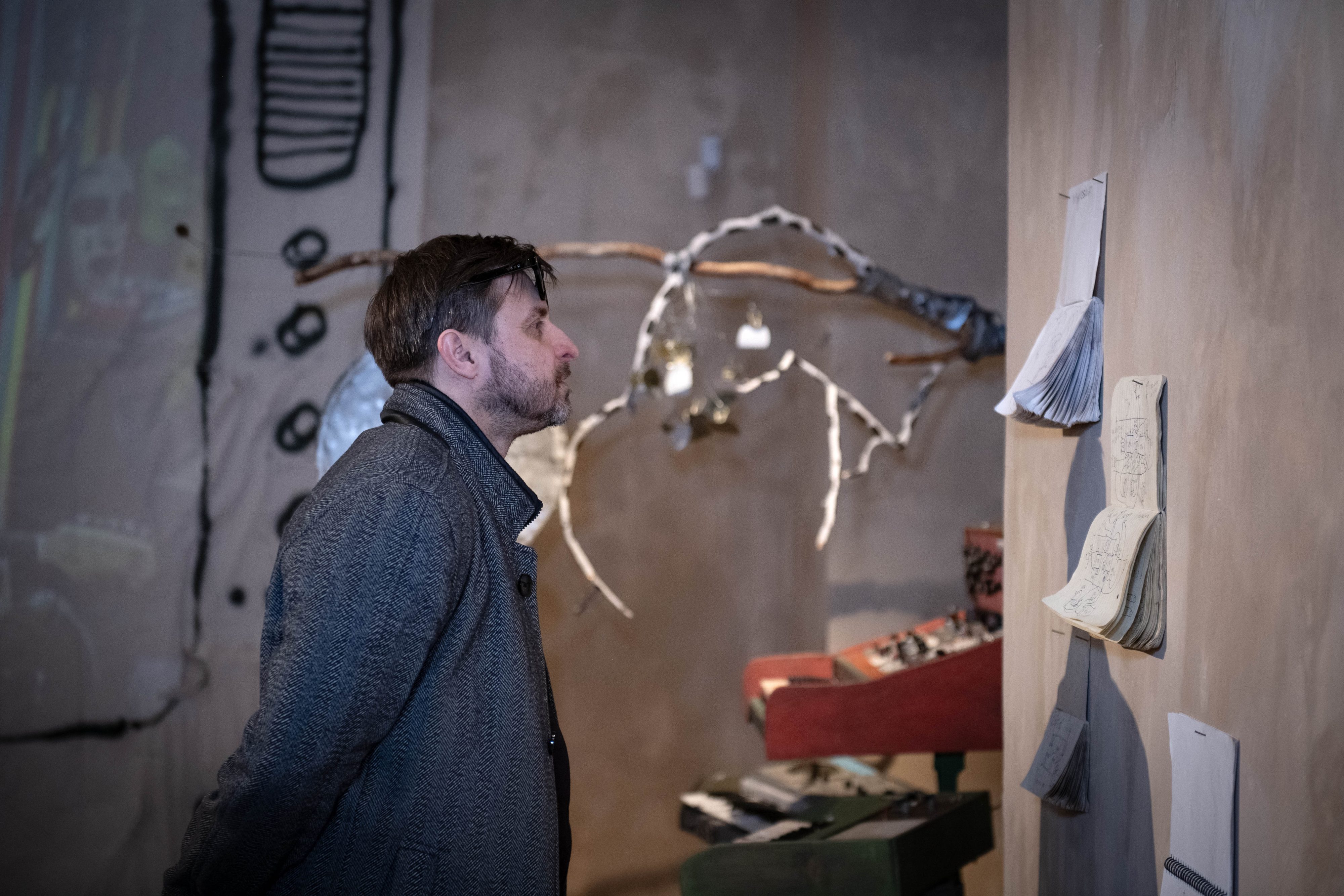
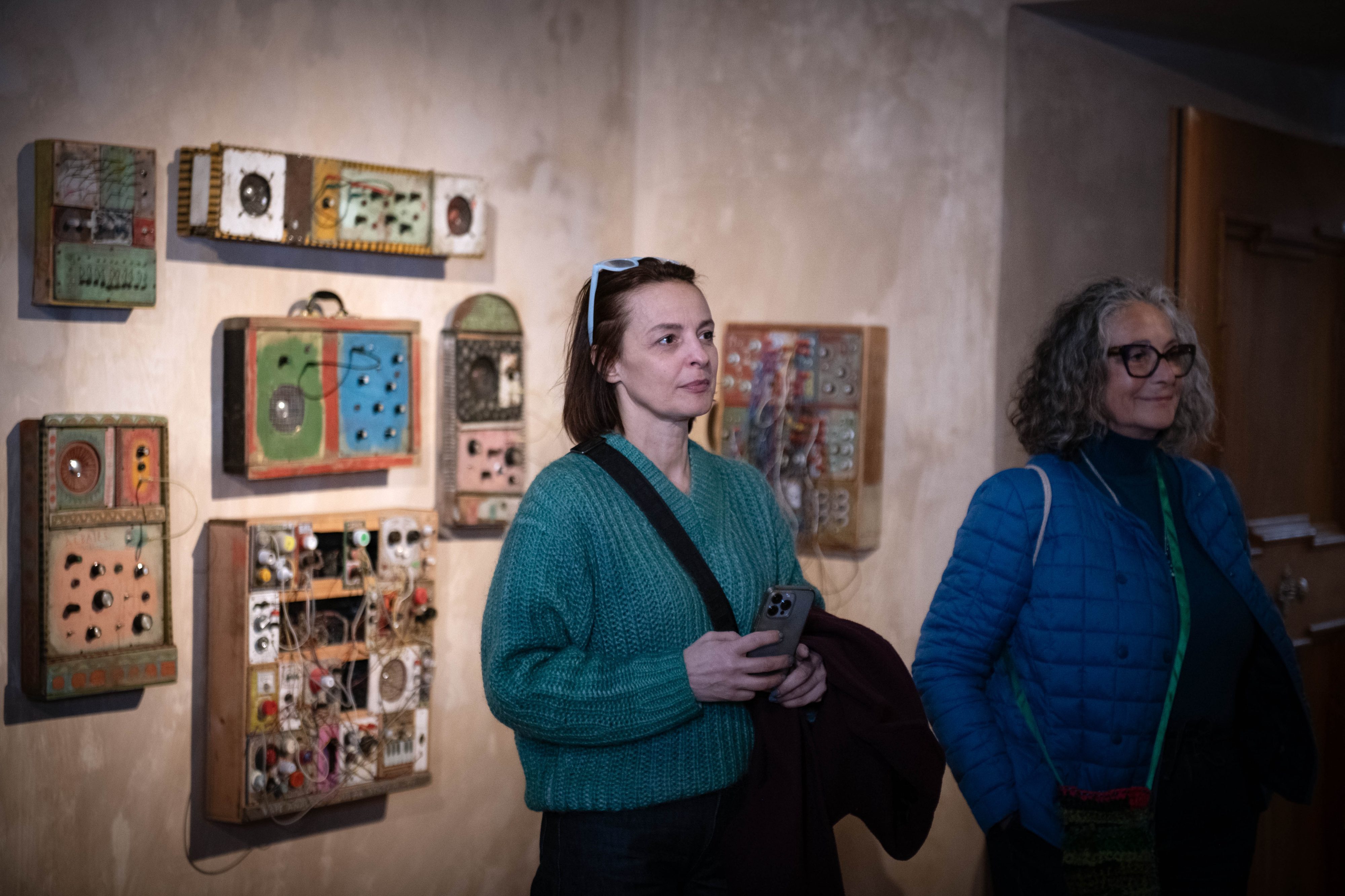
An integral part of the exhibition are Válek’s homemade instruments, synthesizers and kinetic objects. These are intuitively, without technical training and using found materials to make hybrid creations that are sculpture, musical instrument and ritual item all in one. Válek subsequently makes drawings for these elementally fashioned synthesizers, in which he documents the ideas and principles that formed the basis for creating these handmade experiments. These diagrams also contain eccentric or poetic descriptions of the sounds that the objects make – language here becomes another layer of the artwork. Thanks to the interactive character of these artefacts, viewers can physically enter into the exhibition through touch, interactive play and noise. More than merely accompanying the images, in the exhibition sound is an important bearer of meaning.
Untamed does not tell a linear tale, nor does it offer an unambiguous reading. Instead, it creates an open, unstable space in which memory is mixed with fiction, technology with childishness, and ritual with play. Válek frees the landscape and his own experience from authenticity and monumentalisation, and presents creativity as an elemental process. As viewers, we are no mere observers – we are active participants, drawn into a world that is dark and joyfully loud all at once, a world that a world that defies explanation while offering an intense audiovisual and sensorimotor experience.

 English
 Česky
Česky