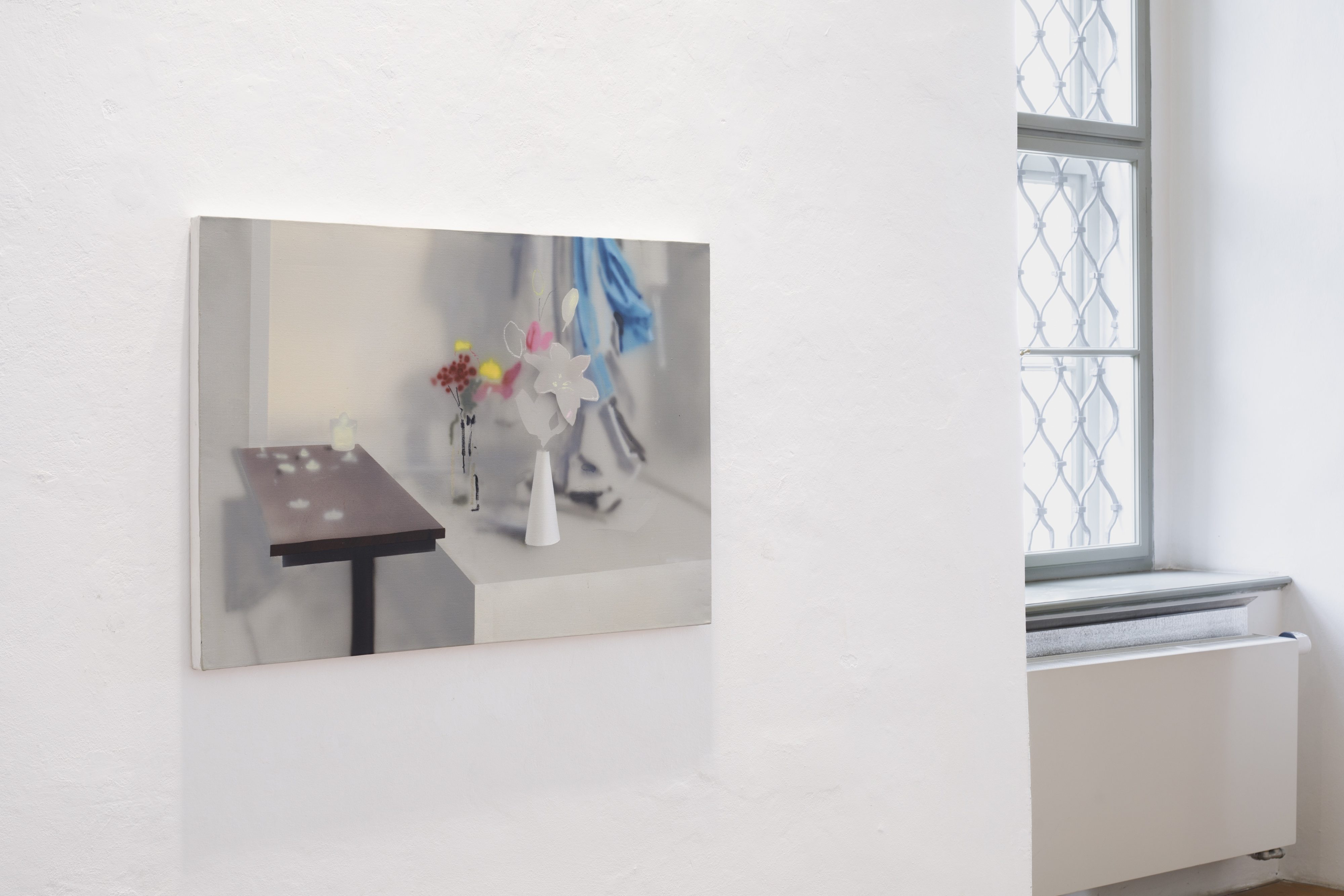
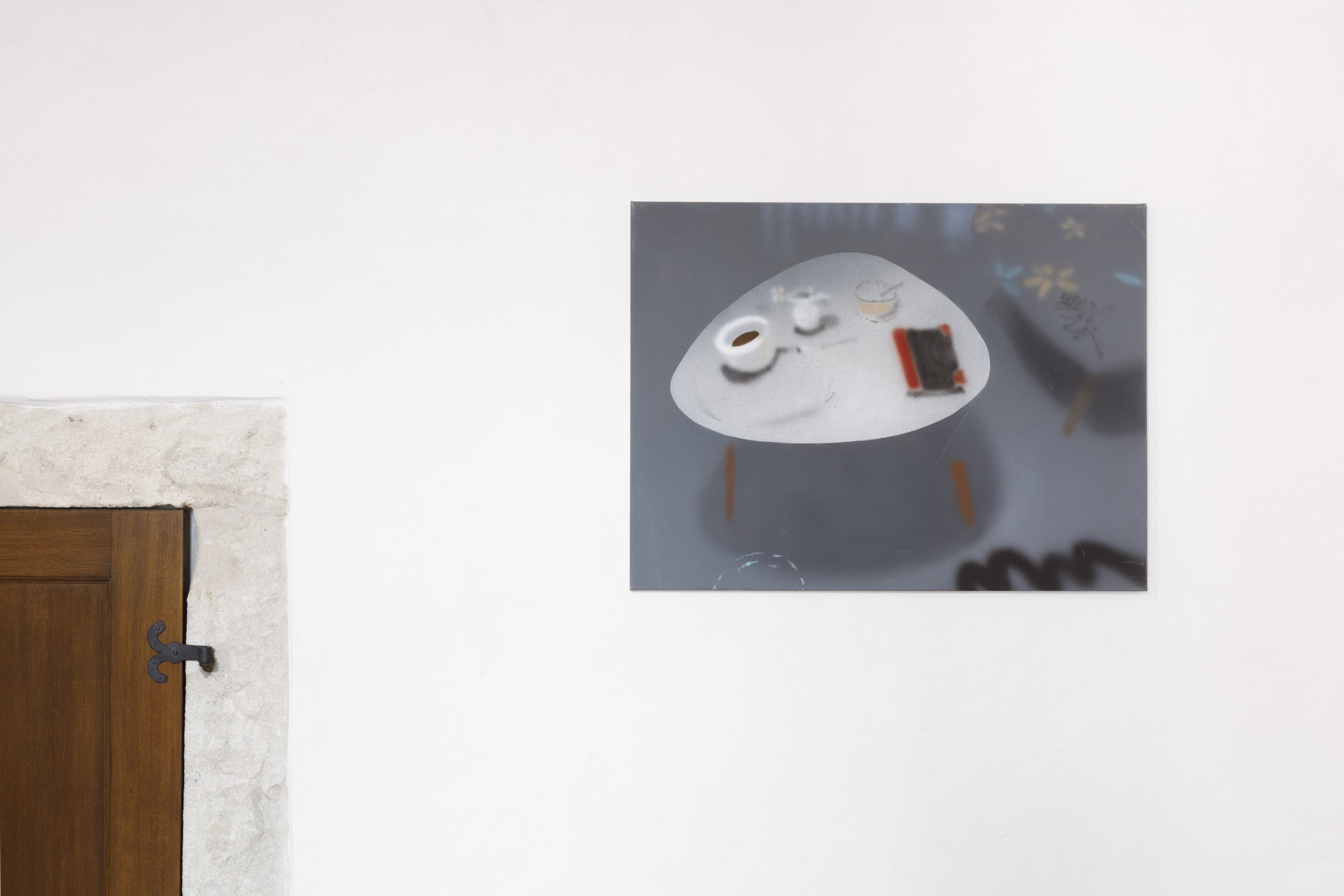
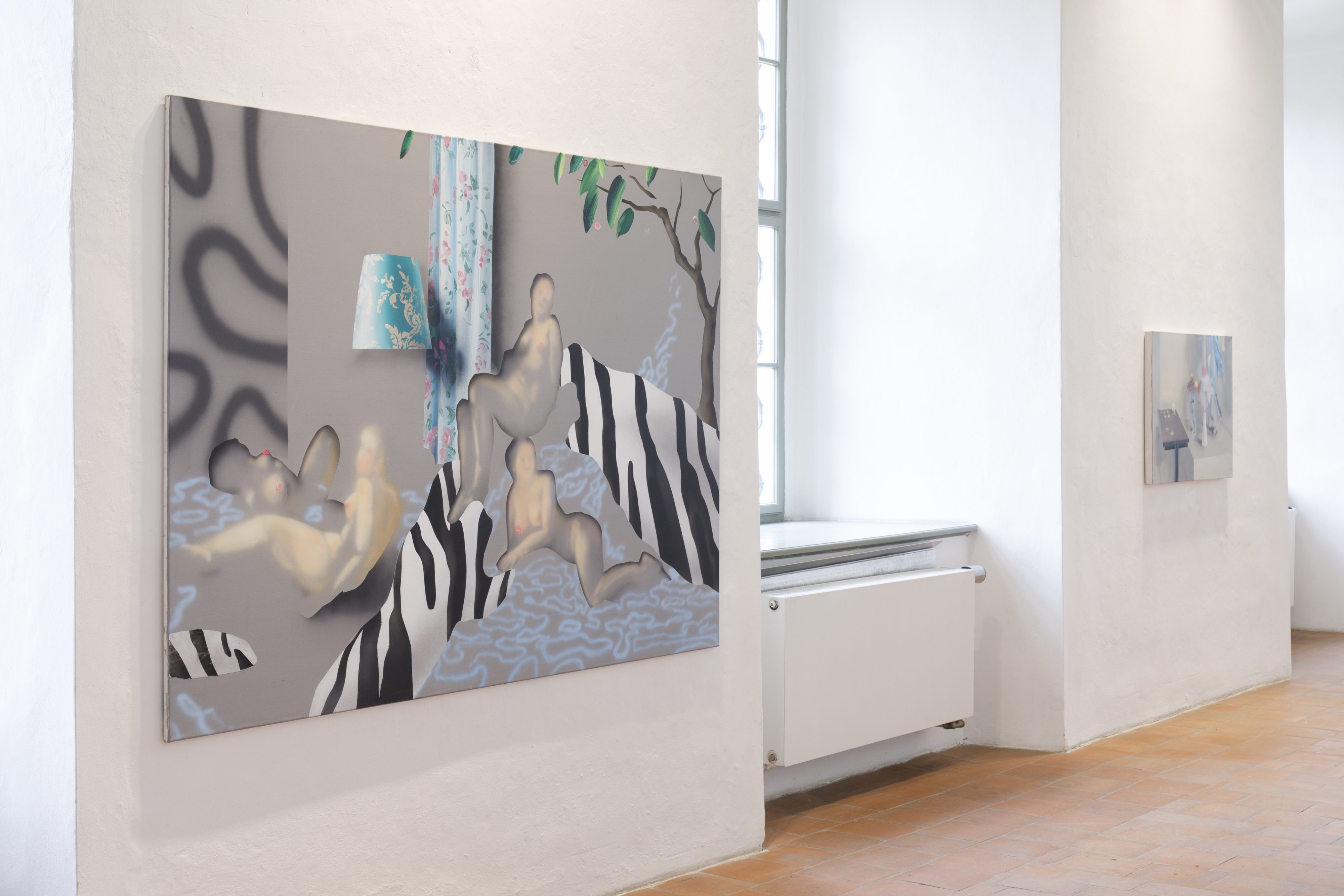
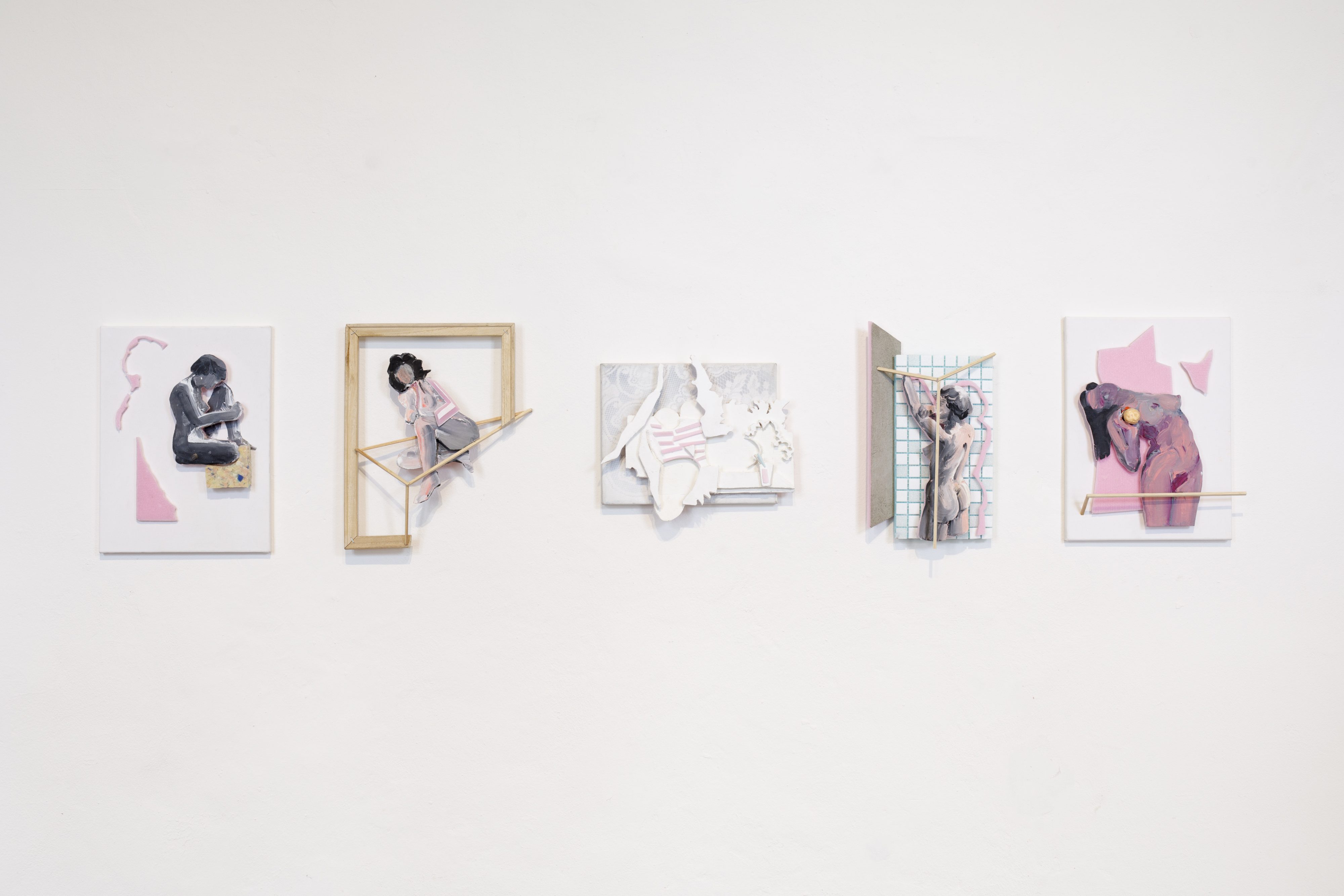
Filip Černý’s OFFLINE_CUT grew out of the pressing need to reassess the power of the image and to find a new painting style at a time when visual art is facing increasingly fierce competition from the visually compelling ‘image-making’ capabilities of virtual reality, digital tools and artificial intelligence.
In the exhibition, Černý turns to the physical image as an object with physical mass, boundaries, resistance, fragility and a surface. To an image that cannot be swiped with a finger, that cannot be shared, erased or replaced by another version; an image that acts on the viewer directly – materially, physically and through the senses.
The title of the exhibition can be read in several ways. The term ‘offline cut’ refers to a rough film edit prior to its final post-production, before the addition of effects, before the illusion of perfection. But the title can also be understood as a cut into reality, into the image, into digital precision. Above all, however, it is an expression of the artist’s decision to step out of virtual weightlessness and to return to a place where the image once again resists. It is a return to material, construction, touch, mistakes and physical intervention.
The exhibition is not a flight into the past or a nostalgic return to painting as a safe medium. Rather, it is an attempt at finding a new way of breaking out of virtual reality, which envelops us with its smoothness and infinite reproducibility. Today’s digital tools are capable of imitating just about everything. They can create a semblance of depth, surface, light and space. But they are incapable of being vulnerable in the same way as physical matter. They don’t know how to break or crumble; they do not show signs of cutting, gluing, randomness or imperfection. It is here that Černý finds painting’s new energy.
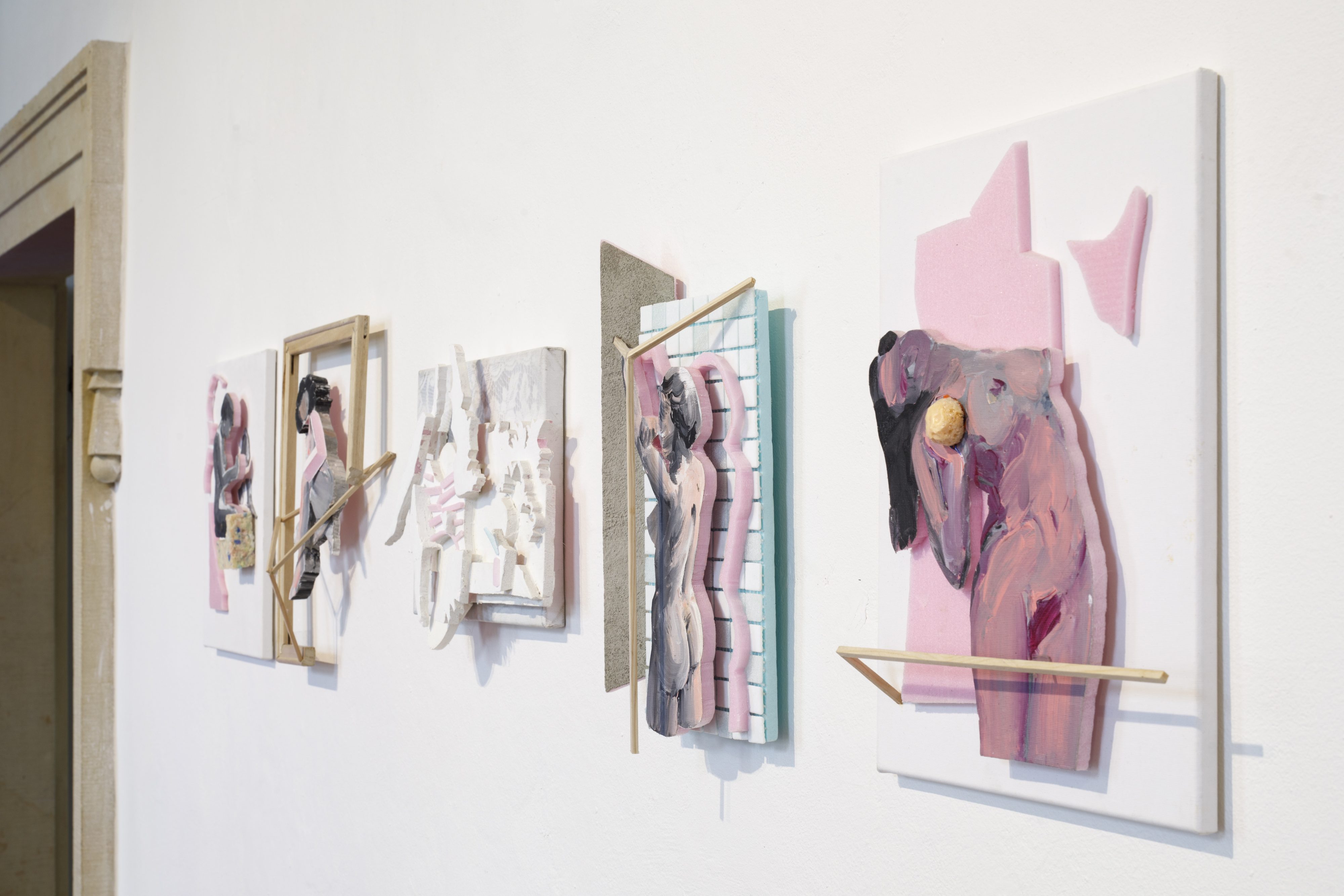
OFFLINE_CUT combines several ways of liberating the image from digital immateriality and once again giving it physical mass. One segment of the exhibition consists of assembled paintings whose components are cut out, removed from an original whole and reassembled into a new composition. Common building materials such as wooden slats, moulding, polystyrene, or concrete make their way into the painting, combined with the construction of the frame and with the illusionistic fragments of the painting. The image is no longer just a thing we look it; it is also something that is arranged before us, that occupies space and defies its own two-dimensionality.
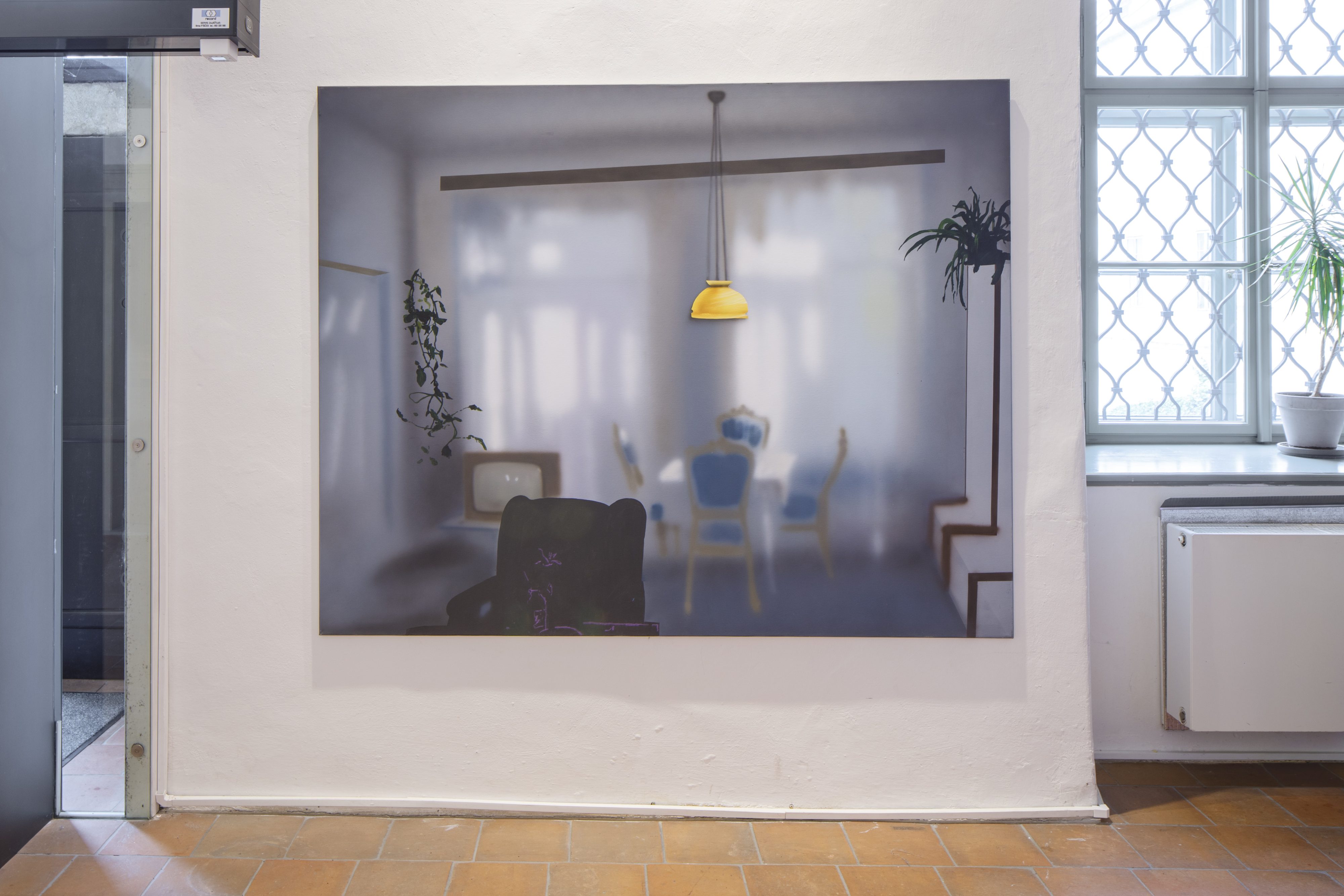
Another set of works are paintings based on digital templates –3D LiDAR scans of still life scenes, interiors or other scenes from which Černý selects that perspective that he considers the most visually precise, the most unsettling or the most open to further transformation. He then translates this record into an expressive, densely painted form. The digital original is not a final product, but merely the starting point for its rematerialization: in the painting, the data image of the space in question is transformed into physical gesture, into a physical layer, traces of the hand and physical experience. LiDAR technology captures data about distance and depth and thus enables the creation of a three-dimensional representation. In fact, this combination of measurement, mapping and incomplete model is an important source of Černý’s new visual uncertainty.
The third part of the exhibition consists of smooth airbrush works whose soft, unfocused and dematerialized painting style is a reference to the online world. They feel like images on the margins of the visible: silent, distant, almost virtual. Their smoothness and subtle visual quality form an important counterpoint to the relief-based, structurally assembled and material-heavy works. In fact, it is this tension between smooth visual simulation, a digital template and a physical relief that forms the core of the exhibition. OFFLINE_CUT marks a return from the image as a virtual record to the image as a place of physical touch, mistakes, corporeality and material reality.
This approach has a deeper continuity in Černý’s work. His paintings have long oscillated between the seen and the ‘imagined’, between a comprehensible sign and its transformation into a riddle. Černý is never content with merely transcribing what he sees. He selects fundamental forms from reality, liberates them and assembles them into a new imaginative world. Crucial here is the tension between what the eye focuses on, what escapes it, and what it must imagine. The image thus becomes a stage where seeing is constantly questioned and where the sign changes shape according to the conditions in which it finds itself. Petr Vaňous aptly captured this long-standing quality of Černý’s work when he emphasized the fact that Černý doesn’t just transcribe visible reality, he creates a new pictorial world.
In OFFLINE_CUT, this mutability of the sign is transferred onto matter. It is no longer merely a visual illusion, a blurring, a stencil, an airbrush image or the illusion of depth. Now the image literally breaks out into space. What could previously be understood as a distant view into another reality approaches the viewer as a spatial situation. The painting steps out of itself. It ceases to be a mere projection and becomes a living organism.
This shift is particularly evident in Černý’s object paintings, where pink extruded polystyrene, wooden structures, cuts, gluing and an admitted roughness feel like an open revolt against the sterile perfection of the digital environment. The material is cheap, fragile, construction-grade, almost banal – and thus perfectly analogue. It carries within it something out-of-place, raw and contemporary. It is not the lofty material of traditional sculpture, but rather the material of today’s provisional reality: insulation, construction, transience and temporariness. And Černý introduces it into the painting as proof that painting can regain its force and urgency even without the use of refined materials traditionally associated with works of art.
At the same time, however, Černý never ceases to be a painter of imaginative worlds. For him, still lifes, landscape scenes, interiors, female figures, abstract shapes, historical references or mundane objects are not fixed motifs with a single meaning. They are segments that shift and return, that are deformed and reassembled. The female figure is not merely a figurative subject, but one sign within his pictorial system: a body, a shadow, anima, an alter ego, a part of the space and a disruption thereof.
OFFLINE_CUT can thus be understood as an exhibition about rediscovering the material essence of the image. It is not a rejection of the present, but an effort at experiencing it intensely. The exhibition does not come across as a calm presentation of a new series of works, but as a record of Černý’s artistic research. The image is reborn from the tension between what vanishes into digital space and what remains insistently physical. The tension between appearance and touch, between projection and material, between a smooth screen and the rough edge of a physical cut.

 English
 Česky