
 English
 Česky
GASK presents a hundred years of Czech collage
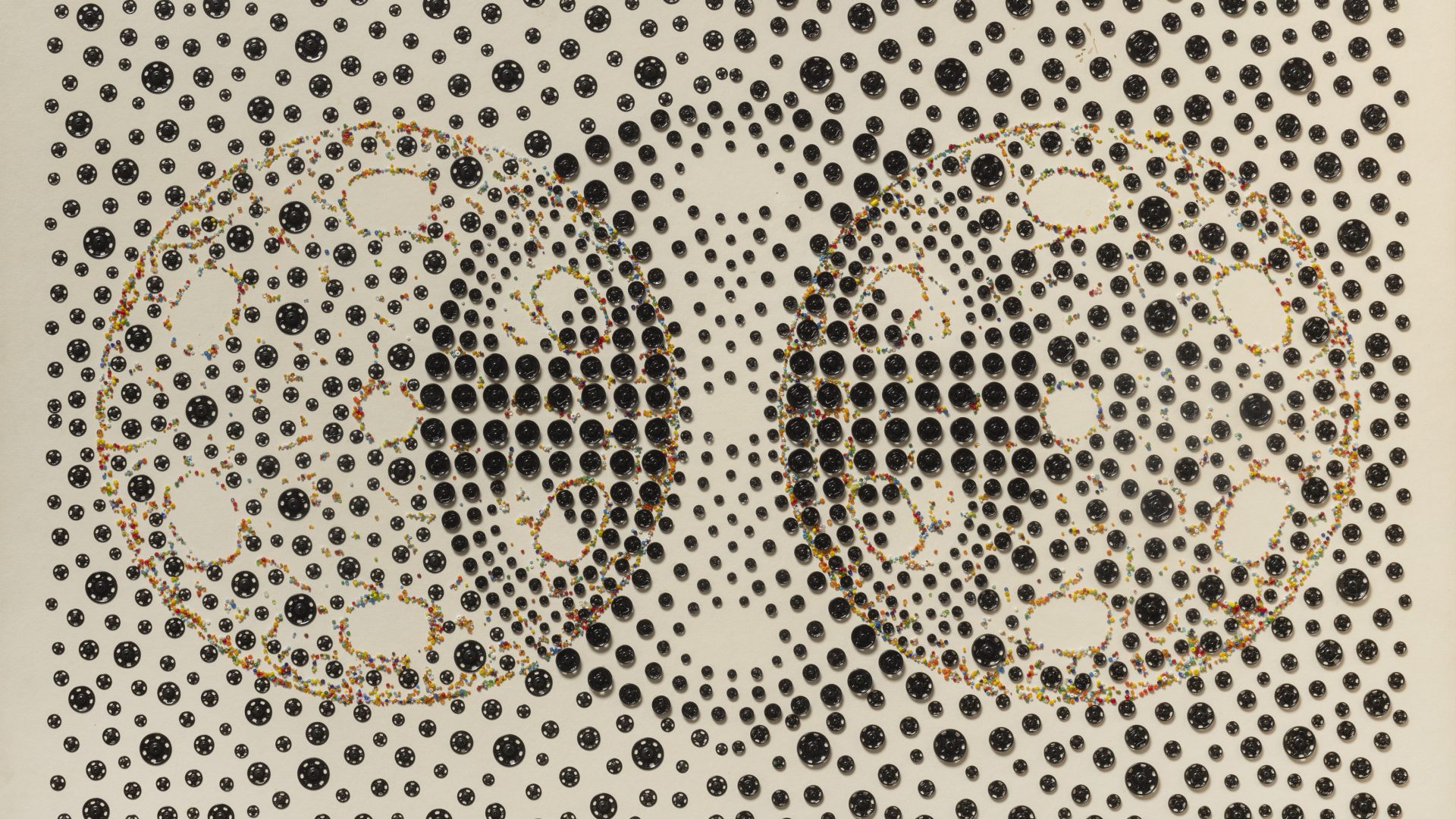
The Gallery of the Central Bohemian Region presents White Collage, Black Sunday, an exhibition of nearly 140 works from the Pražská plynárenská collection examining the transformation of Czech collage art over the past 100 years. Consisting of a cross-section of works from a collection systematically dedicated to collage, the exhibition shows this medium as not just an artistic technique, but also as a broader creative concept. White Collage, Black Sunday can be seen at GASK from 1 November 2026 to 28 March 2027.
During the 20th century, collage art significantly changed how artists worked with the image, text and reality itself, and collage concepts gradually made their way into literature, film, theatre, graphic design, advertising and today’s digital culture. The range of these approaches is reflected in the very title of the exhibition, which references two works from the collection – White Collage by Jan Kotík and Black Sunday by Libor Fára – that also exemplify the collection’s broad scope, with works characterised by minimalist reduction, geometric order, and imaginative, poetic and existential positions.
White Collage, Black Sunday follows the changing character of Czech collage over the past 100 years. Beginning with the interwar avant-garde, the exhibition presents works by Toyen, Jindřich Štyrský, Adolf Hoffmeister and Václav Zykmund, among others. A significant number of works were made in the post-war era, when collage underwent changes in both form and technique, as artists combined it with other artistic approaches and media. Collage ceased to be limited to two dimensions and was used in object art and installations. In addition to Jiří Kolář, who came up with his own distinctive system of collage methods, the exhibition also shows works by Běla Kolářová, Jan Kotík, Ladislav Novák, Eduard Ovčáček, Zbyněk Sekal, Aleš Veselý, Jaroslav Vožniak, Libor Fára, Dalibor Chatrný, Radek Kratina and other Czech artists from the second half of the 20th century. Additionally, through works by Jana Kasalová, Jiří Kovanda, Vladimír Houdek, Jiří Petrbok, Petr Písařík and other artists active today, the exhibition also examines how collage has changed within contemporary art.
‘White Collage, Black Sunday is more than just a survey of important artworks; it is also a testament to the carefully considered, long-term collecting activities that have made possible the acquisition a number of works that would otherwise be unavailable today’, says Lukáš Kania, one of the exhibition’s curators. The exhibition thus offers visitors a glimpse at the evolution of modern and contemporary art through a medium that has significantly influenced the visual culture of the past 100 years.
In conjunction with the exhibition, the GASK Learning Centre has put together several programmes for adults and families with children. The exhibition also includes a GASK Studio designed to shed additional light on selected aspects of the exhibiting artists’ work
For the past more than two decades, Pražská plynárenská has systematically built a collection focused on collage, assemblage, photomontage and related experimental art forms. This focus ranks among some of the most unique collection projects in both the Czech Republic and all of Central Europe. It currently comprises 575 works, a quarter of which will be on display at the exhibition.
White Collage, Black Sunday
1 November 2026 – 28 March 2027
Gallery 1
Exhibition opening: 31 October 2026, 4pm
Curators: Jiří Machalický, Vanda Skálová (GASK), Lukáš Kania (curator, Pražská plynárenská collection)